
Population Providence
- DIPLOMACY
- Jul 9
- 10 min read
Updated: Aug 14
Humans, Avatars, and Humanoids.
Founder & Executive Director, Strähl Composite.
Executive Summary
Our population is more demographically diverse than ever, disproportionately split between rapidly ageing regions and regions experiencing youth swells. Striking inequalities and disparities persist in life expectancy, fertility, and reproductive rights, varying widely based on location and socioeconomic status. The interconnectedness of humans on the internet creates a borderless global community. It unites billions of people, transcending physical geography to allow instant sharing of ideas. This digital web redefines how we communicate, work, and collaborate, functioning much like a collective human nervous system. Avatars and humanoids can be integrated seamlessly with the physical world, breaking boundaries between real and virtual worlds. The human brain evolved to seek immediate feedback, making fast-paced digital environments naturally more captivating than the long-term, complex challenges of reality. Does the multiplication or subtraction of populations represented by technological innovations constitute progress to humans? Is the human, in the most fundamental sense, disappearing?
Introduction
Earth is an interesting place, an oblate spheroid with an equatorial diameter of about 12,756 kilometers (7,926 miles) and a polar diameter of 12,714 kilometers (7,900 miles). It has a circumference of roughly 40,075 kilometers (24,901 miles) at the equator and a total surface area of about 510 million square kilometers (197 million square miles). One can travel vast distances and not run into another human being. There are places where many humans flock like flamingo birds on Lake Bogoria, where the water temperature matches the reception received or deceives like a tale of two thieves. To avoid the reiteration of old phrases, as well as the placing of too much significance on population history, our numbers are rising. They are rising at a time when our embrace of innovations has made our generation one of the most connected to each other, albeit largely virtually, and afforded the luxury of communication at the speed of light. As of this excerpt, there are 8,306,978,965+ humans on Earth. That’s 4.5 births offset by 1.8 deaths every second, and a global population projection of 9.7 billion people by 2050.

Figure 1: Concentrations of population distribution across the world. Areas (cell size of 10 × 10 km) with less than 50 000 inhabitants are not shown. The height of a bar reflects the total population. Source: Atlas of the Human Planet 2016.
Since the beginning of this year, there have been over 72,000,000 births and almost 30,000,000 deaths. We have slightly more males (50.5 percent) than females (49.5 percent), while our median age is 30.9 years with an overall life expectancy of 73.3 years. The male-to-female ratio can vary significantly based on cultural factors, migration patterns, and local life expectancy. For instance, countries heavily driven by migrant labor like Qatar can have male-to-female ratios as high as 248.2 males per 100 females, while countries experiencing outward migration or specific mortality trends like Moldova have ratios as low as 85.2 males per 100 females. Approximately 25 percent of the total global population are between 0-14 years, 65 percent (the working-age population) are between 15-64 years, and lastly seniors (65 years and older), cover the remaining 10 percent. The United Nations World Population Prospects data confronts a concern that the 65+ demographic is currently the fastest-growing age group globally.

Figure 2: Change in the working age population (20-64, 2020-2060. Source: OECD, 2025.
The Rising Ratio
By 2050, the proportion of the population aged 60 and older will nearly double, and the World Health Organization projects that 80 percent of these older adults will be living in low and middle income countries.
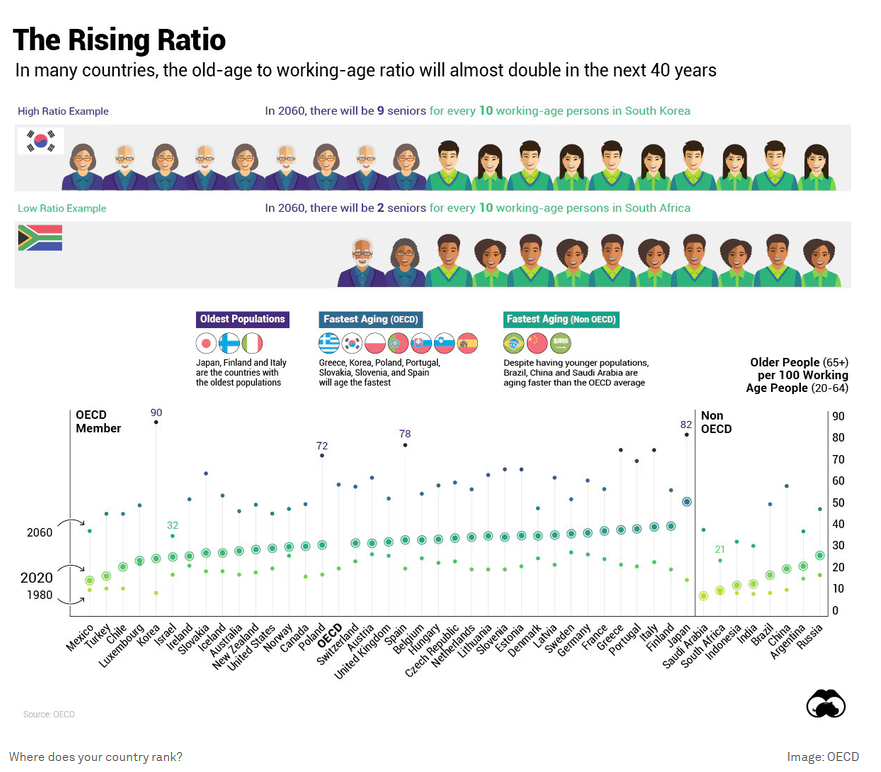
Figure 3: The Rising Ratio. Source OECD, 2025.
Countries with the most pronounced ageing populations are primarily located in Europe, East Asia, and North America, with Monaco (36%) and Japan (nearly 30%) having the highest proportions of citizens aged 65 and older. Other heavily ageing nations include Italy (23.7%), Finland (22.9%), Portugal (22.6%), and Greece (22.5%). An ageing population means the median age is rising due to increased life expectancy alongside declining birth rates. This demographic shift presents distinct realities and challenges globally. Nations like Japan and South Korea face rapidly shrinking workforces and significant labor shortages, heavily accelerating the need for automation and immigration policies.

Figure 4: Population age structure by major age groups, 2015, 2024, and 2025. Source: Eurostat, 2026.
The entire European Union is experiencing this shift, with over 22% of its population aged 65 and older. This places immense pressure on social security, pension funds, and public healthcare. According to the United Nations Population Fund, developing countries are currently witnessing an even faster rate of population ageing. By 2050, it is projected that nearly 80% of the world's older population will live in low- and middle-income regions, many of which lack the institutional infrastructure to support large numbers of retirees. South Korea has the world's lowest birth rate at approximately 0.75 births per woman. This is followed closely by Macau (0.58), Hong Kong (0.84), and several European and Asian nations, including Ukraine, Italy, and Spain, which record Total Fertility Rates (TFR) well below the 2.1 replacement level.
Population Distribution
Moreover, our population is more demographically diverse than ever, disproportionately split between rapidly ageing regions and regions experiencing youth swells. Striking inequalities and disparities persist in life expectancy, fertility, and reproductive rights, varying widely based on location and socioeconomic status. Nearly 60 percent of the global population is concentrated in Asia, 16 percent in Africa, 10 percent in Europe, nine percent in LATAM and the Caribbean, five percent in North America, and the rest in Oceania. The world’s ten least populous fully sovereign countries are primarily microstates and remote island nations, led by Vatican City with fewer than 800 residents. India and China are the world's most populous countries, both exceeding 1.4 billion people and together accounting for over a third of the global population. The distribution is dictated by geography and economic opportunity, contributing to densely packed regions like China and India, and sparsely populated areas like Australia, Canada, and Russia. Density is primarily determined by access to fresh water sources, friendly climate, and fertile grounds, which is why river valleys and coastal regions house the majority of humanity. In contrast, deserts, high mountain ranges, and polar regions remain largely uninhabitable.
The Space Occupied
Take the current population of 8.3 billion humans, standing shoulder-to-shoulder, they would, in theory, fit within the 1,215 square-kilometer (469 square-mile) city limits of Los Angeles. To house the same population at a livable, but high density place like the 27,000 people per square mile in New York City, it would require a landmass of about 300,000 square miles, an area slightly larger than the Republic of Türkiye. For explicit emphasis, if every person were compressed into a block-like solid matter, all flesh and bones of the 8.3 billion humans could physically fit inside a single cube measuring just one kilometer high, wide, and deep. Yet look at what we have been capable of and the indelible mark we have left on the planet and the totality of civilizations. While humans take up surprisingly little physical space, providing the necessary resources—such as food, water, sanitation, and infrastructure—means humanity actually occupies and influences a massive portion of the Earth's surface. Presently, that territory has shifted to the internet, and the occupation of it by humans in a gripping digital world where limitations on human connections are challenged.
Humanity Is Gaining A Nervous System
The interconnectedness of humans on the internet creates a borderless global community. It unites billions of people, transcending physical geography to allow instant sharing of ideas. This digital web redefines how we communicate, work, and collaborate, functioning much like a collective human nervous system. It is an apt comparison given the similarities between the human nervous system and the internet. As one study at Cornell University put it, “the internet is humanity gaining a nervous system.” Information is instantly transmitted throughout the internet from one side of the world to the other. Previously, information traveled through mail, media outlets, and through word of mouth from one human to another. Internet connections grew exponentially as more humans connected through shared values and beliefs, and as the desire to access more information and competition enabled the “nervous system” to transform itself. Communities and minority groups could easily find support there, share vital resources and organize around coalescing issues. Social media networks provided linkages to personal lives and allowed humans to share information that would otherwise be obscured from view by distance and common discretion. In contrast, we grew more distant as a result from lack of meaningful communication and deficiencies of non-verbal cues and face-to-face interaction. Those in remote communities still suffer from accessibility, and inequality in infrastructure and digital literacy has lead to isolationism within the system.
The ease of making transitive online connections sometimes correlates with fewer long-lasting relationships in core networks. However, it is that very same dissonance that has contributed to a growing virtual world population, fragmented across different platforms and technologies. As technology evolves, the focus is shifting from simply connecting devices -Internet of Things (IoT) - to a more human-centric model -Internet of Humans (IoH). This emerging field explores how augmented reality (AR) and wearable technology (WT) can foster a more realistic, collaborative, and natural augmented human experience. Overall, global trends indicate that over 171 million people use virtual realty (VR) technology, and a staggering 6 billion people actively participate on the wider internet using some form of digital avatar or virtual profile. We have become more occupied with the virtual world because digital platforms are engineered for instant gratification, offering quick rewards, idealized social validations, and limitless escapism. The human brain evolved to seek immediate feedback, making fast-paced digital environments naturally more captivating than the long-term, complex challenges of reality. Virtual worlds grant total freedom and control, allowing users to experience varied realities or simply suppress self-awareness without permanent, real-world consequences. The brain easily accepts virtual environments as meaningful, causing users to form genuine emotional attachments to digital companions and progress metrics.
Implications For The Future of Humanity
This brings us to a critical juncture in population evaluation and a set of serious questions that may have implications for the future of humanity. Is the human, in the most fundamental sense, disappearing? We have two different but connected worlds, one existing virtually and the other in reality. Excusing the iteration of an actual human being replicated multiple times in virtual representation, both avatars and humans possess similar qualities. When you add the concept of working-age population, should it include avatars earning more than their actual human counterparts? What would the socioeconomic implication drawing from recent legal battles of how to tax social media influencers in countries like Kenya? Furthermore, should it include humanoid robots taking over factories around the world, gradually chipping away at the utility of human beings in routine-related work? How will artificial intelligence eventually slip into this line of questioning? Who or what are we becoming?
Resuming the example of nations experiencing ageing populations like Japan and Italy, they could address social isolation experienced by seniors through intelligent virtual human companions. Computer-generated humans that can be placed in and integrated into physical worlds like your living room, similar to a hologram seen through augmented reality glasses. These avatars can be integrated seamlessly with the physical world, breaking boundaries between real and virtual worlds. Distinctly different from robots, which have also been considered a solution to social isolation among the elderly, virtual humans can be customized to meet specific needs and can be easily deployed at a fraction of the cost.
In our lifetime, we will experience this incredible shift in global human population that is projected to peak at approximately 10.3 billion in the mid-2080s and plateau, or remain relatively stable until the end of the century. Over 60 countries and territories, including China, Japan, Russia, and Germany, reached their population peaks prior to 2024 and are actively declining. These countries are also, unsurprisingly, at the forefront of robotics (to address working-age population shortages) and virtual reality avatars (for the elderly). Necessity is still the mother of invention. Another 48 countries including Brazil, Vietnam, and Iran, are expected to peak and begin declining within the next 30 years. The majority of global growth over the coming decades is driven by 126 countries where populations are still increasing, like the Democratic Republic of Congo and Nigeria that will continue to grow significantly past 2050 due to their high fertility rates. Africa’s youthful population has been touted as an advantage but to Africans the description is simply nomenclature. The youthful population it wields constitutes nearly 60 percent of the continent’s population under age 25 and presents severe challenges driven by mass youth unemployment, skills mismatch, stagnant political representation, and gender disparities. Though many have become educated, they cannot access the formal-sector. As a matter of fact, these youths are the ones turning to the alluded virtual worlds and are making an impact through sheer representation on those platforms where the real world has robbed them of it. This has transcended historical representations of Africans and to a larger extent, Asians. This is the blurring line between reality and virtual reality for human beings.
Borrowing from V. Gordon Childe’s Man Maketh Himself, to approach history in this humble and objective spirit is difficult. As social scientists, we cannot ask history if we have progressed or regressed? Does the multiplication or subtraction of populations represented by technological innovations constitute progress to humans? A question so formulated can have no scientific meaning. There is no hope of any agreement upon its answer. It would depend entirely upon the caprice of the inquirer, his or her economic situation at the time, and even on the state of his or her health. Very few people will come to the same conclusion.
Works Cited
State of World Population report 2024. (n.d.). UNFPA Wcaro. https://wcaro.unfpa.org/en/publications/state-world-population-report-2024
World population clock: 8.3 billion people (LIVE, July 2026). (2026, July 4). World Population Clock. https://worldpopulationclock.net/
Pyramids, P. (n.d.). Male to female Ratio by country 2026. Population Pyramids. https://populationpyramids.org/male-to-female-ratio
United Nations Population Division. (n.d.). [default] Population Division Data Portal. Population Division Data Portal. https://population.un.org/dataportal/data/indicators/53,41,67,52,47,46,50,54,51,49/locations/156/start/2020/end/2025/metadata
Ageing: Global population. (2025, October 1). https://www.who.int/news-room/questions-and-answers/item/population-ageing
Eurostat. (2026, February 2). Population structure and ageing. Europa. Retrieved July 8, 2026, from https://ec.europa.eu/eurostat/statistics-explained/index.php?title=Population_structure_and_ageing
Ageing. (n.d.). United Nations Population Fund. https://www.unfpa.org/ageing
Jones, K. (2020, February 12). These countries are ageing the fastest - here’s what it will mean. World Economic Forum. Retrieved July 8, 2026, from https://www.weforum.org/stories/2020/02/ageing-global-population/
WorldStats - Real-Time World Population Statistics. (n.d.). https://worldstats.io/rankings/lowest-fertility-rate
Humanity Gaining a Nervous System : The Internet : Networks Course blog for INFO 2040/CS 2850/Econ 2040/SOC 2090. (2015, October 23). https://blogs.cornell.edu/info2040/2015/10/23/humanity-gaining-a-nervous-system-the-internet/
Laga, H., Bennamoun, M., Boussaid, F., Laga, H., Bennamoun, M., & Boussaid, F. (2023, November 6). How virtual humans can help the ageing population combat isolation. SmartCompany. https://www.smartcompany.com.au/artificial-intelligence/virtual-humans-ageing-population-combat-isolation/
United Nations. (n.d.). Growing at a slower pace, world population is expected to reach 9.7 billion in 2050 and could peak at nearly 11 billion around 2100 | United Nations. https://www.un.org/en/desa/growing-slower-pace-world-population-expected-reach-97-billion-2050-and-could
Jalata, G. (2014). Challenges and Opportunities of Youth in Africa. https://doi.org/10.17265/1539-8080/2014.06.009
Childe, V. G. (1965). Man makes himself / by V. Gordon Childe ; with a preface by Glyn Daniel. (4th ed.). Watts.



Comments